Europe · Central Europe
🇦🇹 Austria travel guide
Imperial cities, alpine lakes & classical concerts.
- Currency
- € EUR
- Time
- UTC +1
- Emergency
- 112
Best places in Austria
- Vienna. Schönbrunn, the State Opera and coffee houses.
- Salzburg. Mozart’s birthplace and Sound of Music sights.
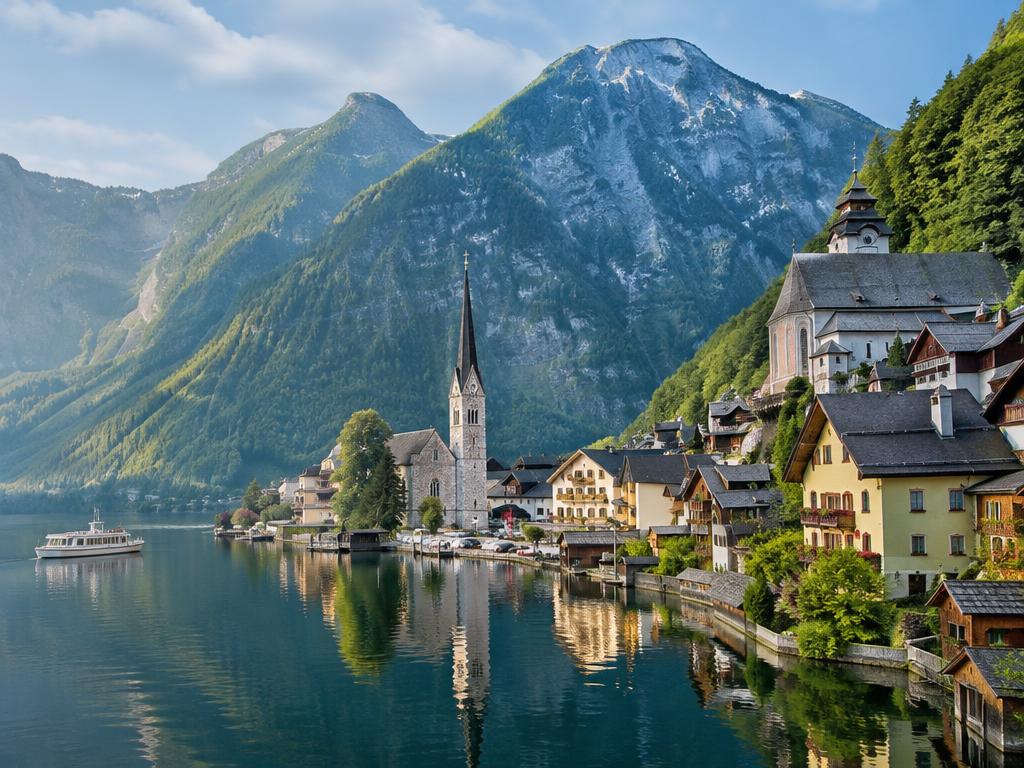
- Hallstatt. Lakeside village and salt mines.
- Innsbruck. Alpine city with Nordkette cable car.
Hidden places
- Grossglockner Road. High Alpine road with glacier views.
- Krimml Waterfalls. The highest waterfalls in Austria.
- Dürnstein, Wachau. Blue church tower above the Danube.
- Zell am See. Lake and mountain views.
When to go
- Best time. May–September; December for Advent markets; Jan–March for skiing.
- Avoid. Midday crowds in Hallstatt — stay overnight.
- Festivals. Salzburg Festival (July–Aug), Vienna Ball season (Jan–Feb).
What you need
- Documents. Passport, Schengen visa if required.
- Pack. Layers, hiking shoes, smart outfit for concerts.
- Apps. ÖBB, Wiener Linien, Bergfex (weather).
- Driving. Buy a motorway vignette.
The soul of Austria
- Start somewhere unforgettable. Vienna, Salzburg, Hallstatt and the Salzkammergut, Innsbruck and the Tyrol.
- Choose your season. Summer for lakes and hikes, winter for skiing and Advent markets.
- Before you leave. Railjet trains make Vienna–Salzburg about 2.5 hours.
Visual money
- Currency · EUR €. Some traditional places still prefer cash.
- A daily budget. Illustrative, per person: budget €70–110; comfortable €150–280.
- Tipping. Round up or add around 5–10%.
Arrival playbook
- Documents first. Part of the Schengen Area. Check visa rules for your passport, the EU Entry/Exit System and ETIAS requirements on official EU sites before booking.
- Your first ride. City Airport Train (CAT) and S-Bahn link Vienna airport to the centre.
- Get connected. An EU SIM or eSIM works across most EU countries under roaming rules. Save an offline map before leaving Wi-Fi.
Street codes
- Greetings. “Grüß Gott” is the common greeting, especially in rural areas.
- Sundays. Shops close; plan groceries ahead.
- Hallstatt. Residents ask visitors to stay quiet and avoid private property.
Beyond the postcard
- Wachau Valley. Apricot orchards and vineyards along the Danube.
- Zell am See. Lake and mountains with fewer crowds than Hallstatt.
- Graz. A lively university city with great food.
Food dossier
- A few first plates. Wiener Schnitzel, Sachertorte, apfelstrudel and Käsespätzle.
- Coffee houses. Order a Melange and linger; it’s expected.
- Dietary needs. Vegetarian options are good in cities.
Scam shield
- Concert sellers. Costumed touts sell expensive tickets; buy from official venues.
- Vignette. Motorways require a vignette for cars.
- Pickpockets. Watch bags at markets and on the U-Bahn.
Language cheat sheet
- Hello · Grüß Gott / Servus. Thank you · Danke. Please · Bitte.
- How much? · Was kostet das?. Water · Wasser. Help · Hilfe!
- Bill · Zahlen, bitte. Said to your server when you’re ready.
Survival essentials
- Emergency · 112. Police 133, ambulance 144, mountain rescue 140.
- Mountains. Check weather and hut opening times before hikes.
- Power & time. 230V; sockets types C and F. UTC+1 (summer +2).
Your Austria chapter
- A gentle first journey. Vienna → Salzburg → Hallstatt → Innsbruck over 8 days.
- A different pace. Cycle the Danube path through the Wachau.
- Before confirming. This is a starter guide, not live advice. Verify visas, prices, opening times and safety conditions with official sources.