Asia · East Asia
🇰🇷 South Korea travel guide
Hanok lanes, mountain hikes & late-night markets.
- Currency
- ₩ KRW
- Time
- UTC +9
- Emergency
- 112 · 119
Best places in South Korea
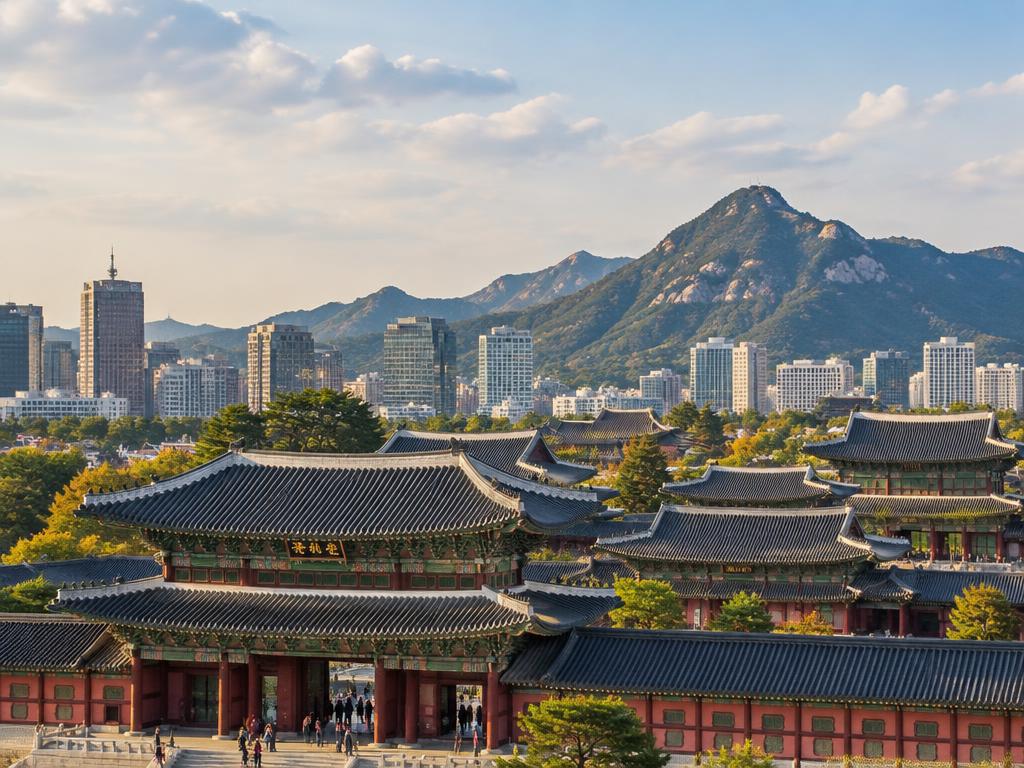
- Gyeongbokgung & Bukchon. Royal palace and hanok village in Seoul.
- Busan. Haeundae beach, Gamcheon village and Jagalchi fish market.
- Jeju Island. Volcanic craters, waterfalls and coastal Olle trails.
- Gyeongju. Ancient Silla tombs and Bulguksa temple.
Hidden places
- Jeonju Hanok Village. Birthplace of bibimbap with traditional houses.
- Damyang bamboo forest. Peaceful walks among tall bamboo.
- Suncheon Bay. Wetlands and golden reeds in autumn.
- Ulleungdo. Remote volcanic island with dramatic cliffs.
When to go
- Best time. April (cherry blossoms) and October (autumn leaves).
- Avoid. July monsoon and humid August; Chuseok holiday travel rush.
- Festivals. Lotus Lantern (May), Boryeong Mud Festival (July), Busan Fireworks (Nov).
What you need
- Documents. Passport, K-ETA or visa if required.
- Pack. Layers, comfortable walking shoes, a small towel.
- Apps. Naver Map, KakaoMap, Kakao T, Papago translator.
- Money. T-money card for transport; cards are widely accepted.
The soul of South Korea
- Start somewhere unforgettable. Seoul’s palaces and markets, Busan’s coast, historic Gyeongju and volcanic Jeju.
- Choose your season. Spring (April) and autumn (October) are mild and colourful. Summer is humid; winter is cold and dry.
- Before you leave. High-speed KTX trains make Seoul–Busan under three hours.
Visual money
- Currency · KRW ₩. Global ATMs are marked; not every ATM accepts foreign cards.
- A daily budget. Illustrative, per person: budget ₩70,000–110,000; comfortable ₩160,000–300,000.
- Paying locally. Cards are accepted almost everywhere. Tipping is not customary.
Arrival playbook
- Documents first. Check whether you need a K-ETA or visa on the official Korean immigration sites.
- Your first ride. AREX trains link Incheon Airport to Seoul Station. Get a T-money card for transit.
- Get connected. Tourist SIMs and eSIMs are easy. Use Naver Map or KakaoMap for directions.
Street codes
- Elders first. Offer seats to elders; priority seats on trains are kept free.
- Dining. Wait for the eldest to start eating. Don’t stand chopsticks in rice.
- Shoes. Remove shoes in homes, some restaurants and temple halls.
Beyond the postcard
- Andong Hahoe. A living folk village of thatched and tiled houses beside a river.
- Seoraksan. Granite peaks and maple valleys on the east coast.
- Temple stay. Spend a night in a mountain monastery with meals and meditation.
Food dossier
- A few first plates. Korean barbecue, bibimbap, tteokbokki and fresh seafood in Busan.
- Free sides. Banchan side dishes are free and often refilled.
- Dietary needs. Fish sauce and anchovy stock are common; vegetarian temple food is a good option.
Scam shield
- Taxi overcharging. Use Kakao T or check the meter is running.
- Club touts. Avoid unfamiliar bars recommended by street promoters.
- Religious approaches. Friendly strangers inviting you to rituals can be pushy; decline politely.
Language cheat sheet
- Hello · Annyeonghaseyo. Thank you · Gamsahamnida. Sorry · Joesonghamnida.
- How much? · Eolmayeyo?. Water · Mul. Help · Dowajuseyo! Not spicy · An maepge.
- Read Hangul. The alphabet can be learned in an afternoon and helps with signs.
Survival essentials
- Emergency · 112 / 119. Police 112, fire and ambulance 119, tourist helpline 1330.
- Air quality. Spring can bring fine dust; check daily air quality.
- Power & time. 220V; sockets types C and F. Time zone UTC+9.
Your Korea chapter
- A gentle first journey. Seoul → Gyeongju → Busan by train over 8–10 days.
- A different pace. Fly to Jeju for coastal walks on the Olle trails.
- Before confirming. This is a starter guide, not live advice. Verify visas, prices, opening times and safety conditions with official sources.